What a negative prompt is, and why it does almost nothing here
We asked for twenty things to be left out. Four came out. Five got more prominent than they were before we objected.
Experimentprompting·FreeImgGen Team·Updated ·Tested on Z-Image Turbo
The short answer
A negative prompt is a list of what you want left out. Writing "no cars" or "no people" is close to useless on a model with no separate negative-prompt input. Across twenty pairs, seventeen of which were testable, the instruction was honoured four times and ignored thirteen. In five of those failures the thing we asked to remove came back larger or more central than in the plain version, which is the outcome the mechanism predicts.
MethodTwenty scenes, each generated twice: once as a plain phrase, once with a short "no X" clause appended. Forty images, one generation each, Z-Image Turbo, 2026-08-12, nothing re-rolled. Scored by eye on one question: is the named thing absent? Eight of the twenty pairs are below.
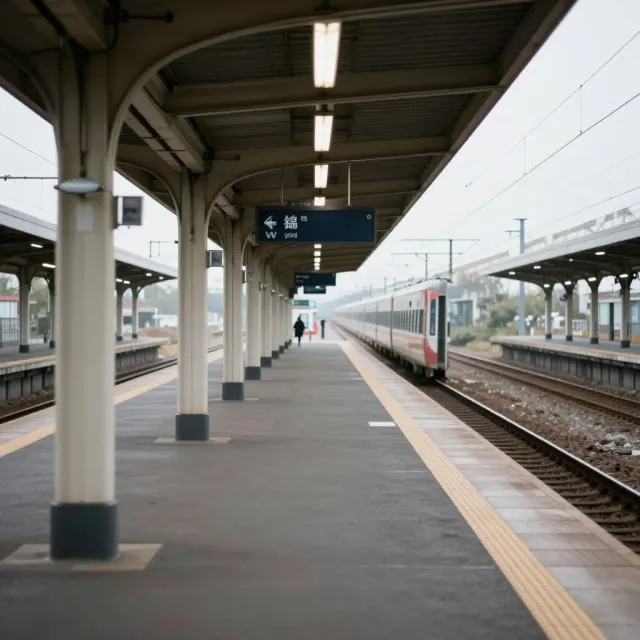
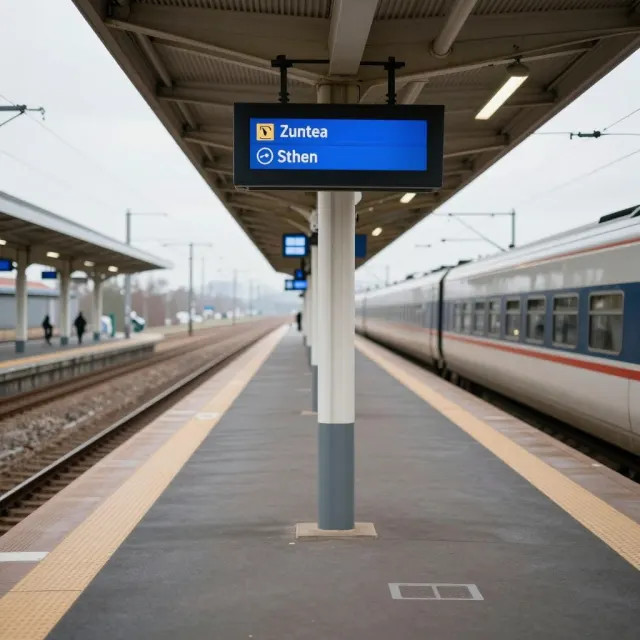
The clearest failure in the set. The plain version has a small sign far down the platform. Objecting to signs produced a large blue one at the top of the frame with two lines of text on it.
Twenty scenes, each run twice. Three of the twenty turned out not to be testable because the plain version did not contain the thing we then asked to remove, so the instruction had nothing to act on. That leaves seventeen real tests.
Four honoured. No books, no windows, no appliances, no tools.
Thirteen ignored. Including no people, no cars, no chairs, no wheels, no skyscrapers, no leaves on the ground.
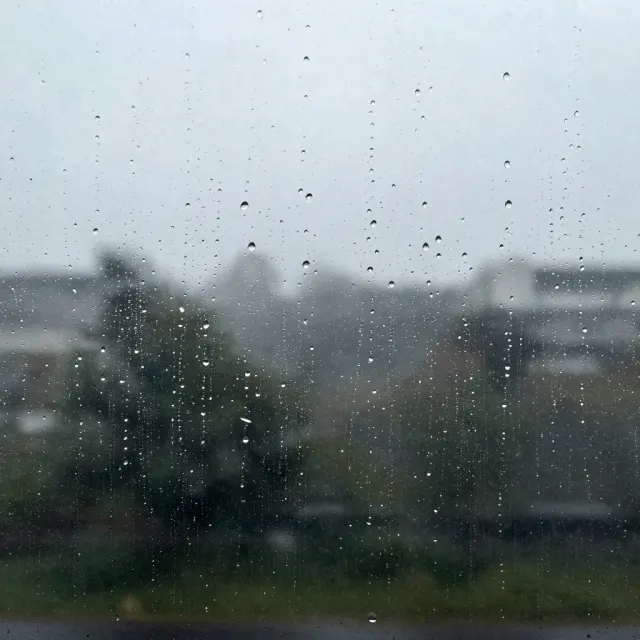
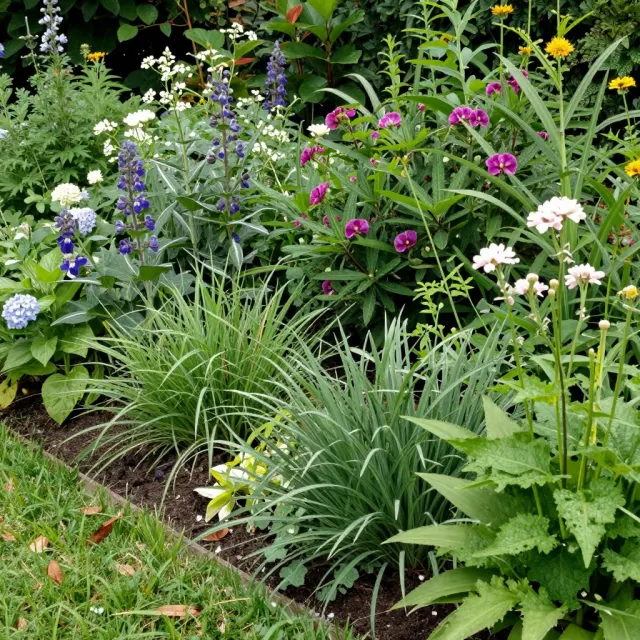
Five of those thirteen went backwards, with the forbidden thing arriving larger or more central than it had been in the plain version. Signs, reflections, raindrops, flowers and wine glasses.
One scorer, judged by eye, on one model, on one day. The images are all above or in the set, and the prompts are printed, so the scoring is checkable.
Why the reversals happen
This is not the model being contrary. It is what the pipeline does.
Your prompt is turned into vectors by a text encoder, and those vectors steer every denoising pass. There is no subtraction operator anywhere in that process. Writing "no signs" puts *signs* into the conditioning, along with a small function word that carries very little visual meaning, because "no" does not correspond to any consistent pattern of pixels the way "fog" or "night" does.
This is also why real negative prompts, the kind Stable Diffusion exposes as a separate field, do work. They are not part of your prompt. They are a second conditioning vector that the sampler steers away from, which is a different operation entirely. Our generator has one text box, so there is nothing to steer away from.
What the four successes had in common
Books off a shelf, windows out of a room, appliances off a counter, tools off a bench.
In each case, the thing being removed is a removable object in an otherwise complete scene. An empty shelf is a perfectly ordinary photograph. A bench with nothing on it is a photograph someone might take.
The failures are mostly cases where the named thing is either the point of the scene, a market without people, a lake without a reflection, or so strongly associated with it that its absence would be strange. The model is not obeying or disobeying. It is producing the most probable picture for a prompt that mentions the thing, and sometimes the most probable picture happens not to contain it.
Ad
What to write instead
Describe the state you want rather than the object you do not.
"An empty farmers market at dawn before the traders arrive" outperforms "a farmers market, no people", because every word of it is a condition the model can picture. That is the same principle measured in one added word versus a full rewrite.
For a lake with no reflection: "a lake with a wind-rippled surface". For a platform with no signs: "a disused platform, boarded up". You are giving the model something to draw instead of something to avoid.
Where that fails, the fallback is boring and effective. Generate several and pick, or crop, or remove it in an editor. Our generator is free and uncapped, so pulling five and choosing one costs nothing but a minute.
Where this does not apply
If your tool has a separate negative prompt field, use it. Automatic1111, ComfyUI, InvokeAI and most local Stable Diffusion setups expose one, and it works because it is wired into the sampler rather than into your sentence.
Our result also says nothing about how other hosted generators handle a "no X" phrase, because we only tested the one we run. If a hosted tool has a single prompt box, the mechanism above suggests it will behave the same way, but we have not measured that and will not claim it.
What we can say is that for the model behind this site, the twenty-run answer is: describe what you want, not what you do not.
Try the reversal yourself
This is the prompt that produced the enormous blue sign. Run it, then run it without the clause and compare.
In a dedicated negative prompt field, yes: it is a separate conditioning signal the sampler steers away from. Typed into an ordinary prompt as "no X", mostly not. In our twenty pairs, four were honoured, thirteen ignored, and five of the failures made the forbidden thing more prominent.
What is a negative prompt?
A second prompt describing what should not appear, supplied in its own field, which the sampler uses to steer away from those concepts during generation. It is not the same as writing "no X" in your main prompt, which just adds X to what the model is thinking about.
Why did asking for no flowers give me more flowers?
Because the word "flowers" enters the conditioning either way, and "no" has no reliable visual meaning to counteract it. There is no subtraction step in the pipeline. It happened to us five times out of twenty, most dramatically with a station sign that grew from a distant speck to the largest object in the frame.
How do I get rid of something in an AI image?
Describe a scene where it would not be there rather than forbidding it. "An empty market at dawn" works where "a market, no people" does not. Failing that, generate several and pick one, or remove it in an editor with a real selection tool.
Does this site have a negative prompt field?
No. There is one prompt box, which is why this test matters here: anything you write is positive conditioning. Generation is free and uncapped, so the practical workaround is to run the prompt a few times and keep the best result.